Sponsored

Catch-can. Well that wasn't difficult

powerboatr

Well-known member
First Name
Robert
Joined
May 9, 2022
Threads
173
Messages
4,343
Reaction score
5,427
Location
North East Texas, Piney Woods
Vehicles
2024 F250 King Ranch Chrome
Occupation
Retired Navy Senior Chief
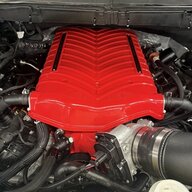
Sorry I’m still stuck on the lack of an engine cover. Another part reduction . I like my nerf cover
You don't have a nerf cover? Omg

Ford F-150 Catch-can. Well that wasn't difficult 20220424_103425
Sponsored


FaaWrenchBndr

Well-known member
First Name
Greg
Joined
Jun 23, 2024
Threads
13
Messages
2,552
Reaction score
2,555
Location
Denver, IN
Vehicles
‘24 XLT Powerboost
Occupation
Semi retired aircraft mechanic
It amazes me just how much crap you catch in these cans that would have just gone right back in the intake. I am running a UPR can and my truck has a SC on it. Every 500-1000 miles I check it and there is about 1/2 inch of this brown, milky gassy smelling juice that I am so glad it NOT going back into my motor.

I always love the question, if these are so good, then why don't the manufacturers add them? Simple, MONEY. Why spend more money on a part when you can just route it to the intake and meet federal req's of not venting to the atmosphere? It always comes back to $$.
Ford F-150 Catch-can. Well that wasn't difficult IMG_6068
 

Samson16

Well-known member
First Name
Kyle
Joined
Mar 24, 2023
Threads
18
Messages
3,622
Reaction score
3,587
Location
Orlando, FL.
Vehicles
'22 F-150 XLT Powerboost Super Crew 4x4
Occupation
Aviation systems
Every 500-1000 miles I check it and there is about 1/2 inch of this brown, milky gassy smelling juice that I am so glad it NOT going back into my motor.
So roughly 1fl.oz per 50 gallons of fuel at 20mpg over 1000mi.
1/6400 or 0.0156% concentration
Helps me to put the recovered sludge in perspective. Setting the little partially filled catch can on top of a 50 gallon drum of gas.
 
Last edited:

Babbage

Well-known member
Joined
Nov 21, 2022
Threads
9
Messages
280
Reaction score
246
Location
Upstate, NY
Vehicles
2021 F150 3.5 XLT 302A FX4 PP2K 36GAL TOW
Occupation
Wild horse rider
Of course it is, but I think a spirited 20 mile jaunt twice a day gets the engine warmed up and the oil all mixed around good. When my habits change to mostly short trips where the engine rarely gets to proper operating temps then sludge and contamination becomes more concerning. Am I wrong? It’s how I imagine it is.
No, I spirited drive FORCES more oil into the intake. If you let your truck idle at 5 mph to and from work you are good.

Look at this picture (Ford 32v) , see all of the black stuff in the middle? That is not suppose to be there, that is OIL getting sucked back in, a catch can stops this. Eventually the intake runners are choked with oil and debris.

Ford F-150 Catch-can. Well that wasn't difficult ba5f616b22f0ff25cd77148252bef6d7
 

Samson16

Well-known member
First Name
Kyle
Joined
Mar 24, 2023
Threads
18
Messages
3,622
Reaction score
3,587
Location
Orlando, FL.
Vehicles
'22 F-150 XLT Powerboost Super Crew 4x4
Occupation
Aviation systems
No, I spirited drive FORCES more oil into the intake. If you let your truck idle at 5 mph to and from work you are good.

Look at this picture (Ford 32v) , see all of the black stuff in the middle? That is not suppose to be there, that is OIL getting sucked back in, a catch can stops this. Eventually the intake runners are choked with oil and debris.

ba5f616b22f0ff25cd77148252bef6d7.jpg
Thanks. I can see where hot oil and high rpm leads to more atomization, but countering that is reduced moisture content in the crankcase with prolonged operation at temperature. Do you think the 3.5 intake runners get choked with oil?
 

Sponsored

FaaWrenchBndr

Well-known member
First Name
Greg
Joined
Jun 23, 2024
Threads
13
Messages
2,552
Reaction score
2,555
Location
Denver, IN
Vehicles
‘24 XLT Powerboost
Occupation
Semi retired aircraft mechanic
The 3.5 intake certainly sees some. All forced air engines will have slightly more blow by than naturally aspirated ones. It’s all about the blow by past the rings.
 
OP
OP
Bobcatou

Bobcatou

Well-known member
First Name
Bryan
Joined
Apr 7, 2024
Threads
86
Messages
374
Reaction score
253
Location
Port Townsend, WA
Website
listentothewindmedia.com
Vehicles
'24 Lariat, (Carbonized Gray Metallic)
I just check my catch-can and it had liquid. (Condensation mostly I guess and some oil) and I only had gone about 50 miles. It wasn't much, but I figure I wouldn't see it yet.
 

Gros Ventre

Well-known member
First Name
Bill
Joined
Nov 13, 2021
Threads
47
Messages
2,690
Reaction score
1,815
Location
Western Wyoming
Vehicles
Powerboost
It amazes me just how much crap you catch in these cans that would have just gone right back in the intake. I am running a UPR can and my truck has a SC on it. Every 500-1000 miles I check it and there is about 1/2 inch of this brown, milky gassy smelling juice that I am so glad it NOT going back into my motor.

I always love the question, if these are so good, then why don't the manufacturers add them? Simple, MONEY. Why spend more money on a part when you can just route it to the intake and meet federal req's of not venting to the atmosphere? It always comes back to $$.
They don't install them because California won't certify them. Not because they break an emissions boundary (they don't) but because they require user servicing.
 

FaaWrenchBndr

Well-known member
First Name
Greg
Joined
Jun 23, 2024
Threads
13
Messages
2,552
Reaction score
2,555
Location
Denver, IN
Vehicles
‘24 XLT Powerboost
Occupation
Semi retired aircraft mechanic
I just check my catch-can and it had liquid. (Condensation mostly I guess and some oil) and I only had gone about 50 miles. It wasn't much, but I figure I wouldn't see it yet.
the pic so poster earlier was about 200 miles. It’s getting colder here in northern Indiana. Most of that was condensation, certainly had a fuel/oil smell to it.
 

Sigma1914

Well-known member
First Name
TJ
Joined
Jun 12, 2024
Threads
7
Messages
222
Reaction score
184
Location
South Florida
Vehicles
2023 Rocky Ridge Ford F-150 XLT 5.0L V8 Coyote
Correct, although with the J&L product the hose connectors are the same as the factory connectors so I don't anticipate any problems there. As far as the stuff entering the intake, I guess its not as big of a deal now that these engines use both port injection AND Direct Injection which helps "wash" the intake valves a bit whereas the Direct inject only engines intake valves tend to build up carbon deposits much more. And to be honest I thought these engines were DI only which is why I installed the can, and was later educated by another member here that they added port injection back in 2017 or so. Oh well, gives me another reason to go tinker in the garage!

In doing my research before I purchased my UPR Catch Can setup for my 5.0 Coyote. It seems like even though the 5.0’s are both direct and port injection. The port injection fuel injectors are only activated during engine idle and are not washing those valves as often as we think they are. So while driving the direct injection fuel injectors are more frequently on. So it is very important to still have a catch can.
 

Sponsored


amschind

Well-known member
First Name
Adam
Joined
Apr 22, 2022
Threads
21
Messages
1,097
Reaction score
1,048
Location
Texas
Vehicles
'21 F150 SCrew 4x4 Powerboost
Occupation
Physician
I'm baffled why I need a catch can. I have put 200,000 miles plus on three vehicles, one of which was supercharged, and one 300,000 (my SHO) miles, all with no oil consumption between changes.

Normally I read about supercharging, or someone putting a high flow air filter that adds 50 hp, or headers that add another 50, along with mufflers that add 30, and other cosmetic myths.

But I still don't know how or why a catch can works.
Great question.

All piston engines have a phenomenon called "blow by", where the imperfect seal of piston rings allows combustion gas past the rings and into the crankcase. You can look at tables for big diesels where the expected blow-by is a known and predictable quantity and is one metric used to track the timing for a rebuild. In the old days, a mini-air filter called a breather was installed on each valve cover and allowed the blow by to leave the crankcase via the pressure gradient between ambient and the slightly pressurized crankcase. This was eliminated for two reasons: 1) a slight vacuum in the crankcase may help with efficiency and 2) blow by is a source of air pollution. The solution was to run all of the crank case gases, mostly blow-by, back through the cylinders and thus through the exhaust system; this is called Positive Crankcase Ventilation, or PCV. EGR, which is also a pollution control technology designed to reduce peak combustion temperature and thus NOX emissions, also returns exhaust gases into the intake air.

The major difference between PCV and EGR gas is that crankcase gas also tends to entrain oil droplets along with the water from combustion. In a port injected engine, the gasoline will tend to clean the intakes and thus prevent accumulation of oil on the intake ports and valves; this is why Ford added port injection to the previously only direct injected engines. By running the PCV gas through a cyclonic screen separator, we encourage the tiny oil droplets as well as condensing water droplets to collect on the screen and drip into the catch can. There are limits on how effective this system can before imposing too great a restriction on gas flow (there is more blow by volume than you might guess), but by and large it does reduce the amount of entrained oil droplets reaching the intake.

Ultimately, all direct injected engines with PCV will require intake walnut blasting. This is maybe $4-600 and generally needs to be done by 150k miles (and probably better by 100k) in a direct+port injected engine. If a catch can doubles that interval, then it has more than paid for itself.

This assumes that the owner keeps the vehicle for that long. Most vehicles made today will make it through a few years at 15k miles/yr with minimal maintenance. For folks who replace their trucks every 2-3 years, a catch can (and indeed most maintenance) is a complete waste of money. Those folks are likely trading in to dealers, who won't pay any more for a well maintained vehicle than one which barely met the minimum requirements. However, for folks who intend to keep their trucks for a long time, particularly if they are using them and demand that they be reliable even when not brand new, maintenance items like this tend to help and keep the cost of that maintenance lower in the long term.
 

Eighthtry

Well-known member
First Name
Boyd
Joined
Sep 4, 2023
Threads
13
Messages
761
Reaction score
455
Location
Heath, TX
Vehicles
2021 Lariat SuperCab 5.0
Occupation
Retired and not looking. I am driving the wife crazy.
Thank you very much for your education. That makes total sense. In my case, catch cans probably don't money out because of low annual miles and the fact that I need to check it at every service. I will most likely die before my truck does.

On the lighter side, how many walnuts do I need to eat before I blast my intake.
 

timnohio

Well-known member
First Name
Tim
Joined
Jun 28, 2024
Threads
8
Messages
128
Reaction score
77
Location
Ohio
Vehicles
2024 Ford F150
Ok. So which catch can is everyone recommending?
I have a 2024 5.0 n/a. 2200 miles on it and want to get a catch can just to have a little piece of mind knowing that gunk is being removed.
Also, I live in Ohio and wondered about this stuff freezing up. Is that something to worry about?
 

Gros Ventre

Well-known member
First Name
Bill
Joined
Nov 13, 2021
Threads
47
Messages
2,690
Reaction score
1,815
Location
Western Wyoming
Vehicles
Powerboost
I use the J&L unit. I live in Wyoming. In winter I see the can fill up about every 500 miles. It is slushy but doesn't freeze hard. even at -30ºF. In summer it stays empty.
 

FirstFord

Well-known member
First Name
Jeff
Joined
May 14, 2022
Threads
65
Messages
771
Reaction score
675
Location
South Central Missouri
Vehicles
2022 F-150 Lariat SuperCab 502A, 4x4 3.5 EcoBoost
Ok. So which catch can is everyone recommending?
The J&L unit is quite popular, and I know that many have also installed the UPR unit. I get the impression that all have been pleased with their choices, so that's a good thing. A fellow forum member brought to my attention a unit made by Improved Racing - a company that I was completely unaware of until he mentioned them. After looking into them, I chose the Improved Racing unit. I'm not saying it is "better" than the other units, but it did have some features that I liked: 7 oz. capacity instead of 3 (or 6 oz. if you use the optional extension) that is offered, and I like the 1/8 quick release turn to remove the can instead of the endless turning, unscrewing to take the can off. Also it looked a little quicker to remove the unit if I ever took it into a dealer (just to avoid any needless grief). But you are going to pay more for this unit. Obviously, it's a personal decision as to if you think it is worth it (however it is on sale right now). I just installed it yesterday, so I can't report anything yet.

EDIT: I forgot to mention that there is one negative regarding the location of the mounting of the can - it is completely in the way of accessing the oil dipstick. Realistically, you need to remove the can to access the dipstick. All the more reason for the "feature" of having the 1/8 turn to remove the can.
Sponsored

 
Last edited:


Top