HammaMan
Well-known member
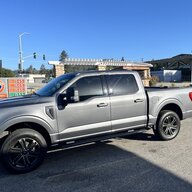
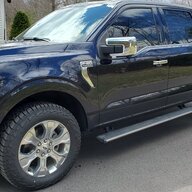
Indeed. Wrapping something in foil doesn't prevent it from cooking. The difference comes from the length of time it takes for the saturation point to hit as well energy required to maintain temp under operation. Sun coming in through a bare windshield vs tinted, especially w/ the front windows also being tinted is a huge delta. That doesn't stop something sitting in the sun for many hours from turning into an oven. The heat rejection allows even 5 minutes of remote start to quickly change that though without having to fight the additional heat load of clear glass.XPEL Prime XR plus is pricey, but the numbers are pretty awesome. 3M is a very close second, and probably indistinguishable in practice. I have to use my truck in places that are pretty dark, so I opted for 70% and still notice a huge difference.
One footnote: the coating will absorb a lot of the incoming IR and UV. With UV, the re-radiated photons are at a higher wavelength, so their damage is mitigated even if the photon eventually reaches you/your upholstery et c. With IR, heating the glass and/or re radiating a slightly lower energy photon into your truck still warms the interior, so that still has to be addressed. In practice, that means that when stationary, the truck interior will reach the same steady state temperature as if there were no tint. When moving, most of the heat energy absorbed by the glass/tint is removed by forced draft convection (i.e. driving the truck through the air). Note that turning the truck on before you get into it on a hot day won't be any more effective with nanoceramic tint, but once you're moving the AC will have far less radiated heat to remove. That means that some kind of cover over the vehicle in the summer may have a bigger benefit than tint for very short trips.
Sponsored