Sponsored

87 vs 93 Octane

JExpedition07

Well-known member
First Name
James
Joined
Feb 14, 2023
Threads
68
Messages
2,126
Reaction score
3,664
Location
Buffalo NY
Vehicles
2023 F-150 STX 5.0L V8
Alright, there is far too much opinion and talk of other engines which is confusing the subject at hand (Caps Locked words are emphasis, not shouting ?).

1. This entire thread discussion should only be about the 5.0L, as referred to in the title.

2. Some people seem to be getting confused about the flex fuel nature of this engine. Indeed it is capable up to E85 (over 100 of your octane, we use RON exclusively over the ditch). It's when you start to put lower octane in it that the timing is retarded and one LOSES power; nothing is GAINED past what the tables already say when one uses higher octane fuel. Therefore, as an example, putting e100 into a stock 5.0 does nothing for performance. That requires a tune (modified tables) and an upgraded fuel delivery system.

3. It is extremely hazardous for the health of the engine to put any lower octane in it than 87. At 12:1 compression, the high cylinder pressure cannot help but start to detonate the low-octane fuel because there is a limit to how far it can retard timing and, at this point, regardless of wether PFI or DI or BOTH (the case at times) are in use, the ECU MUST spray SOME fuel into the cylinders to keep the engine running.

4. Why do 5.0 mustangs make more power and less torque than 5.0 f-150s? Same engine, EXCEPT (importantly) for the cams! Most significantly, the intake lobe profiles are modified in the f-150 5.0 to allow for a shorter intake valve open time and therefore a smaller window for the ECU to spray fuel. This results in a smaller volume of fuel entering during the intake stroke and being compressed during that following compression stroke. In other words, it is INTENTIONALLY running slightly LEAN compared to a mustang until further up the rev range. The resulting trade-off is more torque lower down, but less power higher up. This is why an f-150 5.0 can lug well, especially on the higher octane fuels. Think towing 12,000 lbs.; not good for a mustang ? This whole point is the main reason that, for an f-150, higher octane is better for towing etc. and why lower octanes are so dangerous in an f-150 5.0.

5. Why do supercharged 5.0 configurations require 93 octane minimum? The increased volume of air-fuel mix, provided by the bigger injector/forced air (always in a blower kit) being compressed... higher cylinder pressure has the same effect upon detonation that running lean at relatively lower pressure does. Bad economy if one goes WOT as more air means more fuel, but that richer mix and advanced timing commanded by the supercharged tune , and made possible by the higher octane, makes for less possible detonation. It's why for maximum torque/power scenarios, e100 is used (after upgrading the fuel delivery system of course).

Detonation occurs predominantly in LEAN, low octane scenarios. The above are FACTS. Facts dont care about opinions. If the above contain errors of fact, I'll gladly accept correction IF the evidence demands it. Otherwise, I'll take the documented evidence of my statements of fact because it's out there. If one doesn't believe the facts, it's not my problem, science says "show me the evidence to remove my scepticism and change the way we understand things to work".
Street going engines can run on E100? Where can you even buy that? Sounds like that would be good for racing fuel lol.
Sponsored


SilverPigeon

Well-known member
First Name
Chris
Joined
Apr 27, 2022
Threads
19
Messages
1,410
Reaction score
1,511
Location
Australia
Vehicles
'23 F-150 KR 5.0L 157"WB RHD "Emaciated Edition"
Street going engines can run on E100? Where can you even buy that? Sounds like that would be good for racing fuel lol.
? only with a "proper" tune and a much upgraded fuel system to both pump the low-density liquid through better lines to the injectors (port and direct as per fuelling maps, examples above) and higher-throughput injectors to deliver the increased volume of low density fuel. Unfortunately, that kind of thing is only available to 2020 and earlier f-150s, until a tuner manages to crack the PCM "properly".? Drags or "street racing in Mexico" are indeed the applications ?
 

fordtruckman2003

Well-known member
Joined
Apr 28, 2023
Threads
26
Messages
4,587
Reaction score
3,746
Location
Indy
Vehicles
2021 F-150 FX4 Lariat
Racing fuel sold at public gas station near the drag strip. Well over 100 octane. Swipe card and fill up.

I do believe, as indicated in the printed and digital manual, all of the F-150 engines are tuned at least to mid-grade 91 and will detune with relaxed timing for 87.
 

SilverPigeon

Well-known member
First Name
Chris
Joined
Apr 27, 2022
Threads
19
Messages
1,410
Reaction score
1,511
Location
Australia
Vehicles
'23 F-150 KR 5.0L 157"WB RHD "Emaciated Edition"
Racing fuel sold at public gas station near the drag strip. Well over 100 octane. Swipe card and fill up.
Indeed ?
I do believe, as indicated in the printed and digital manual, all of the F-150 engines are tuned at least to mid-grade 91 and will detune with relaxed timing for 87.
And, in the case of the flex-fuel capable 5.0, up to e85 at >100 of your octane ?
 

bgalakazam

Well-known member
First Name
Lubo
Joined
Jun 16, 2021
Threads
8
Messages
257
Reaction score
231
Location
Colorado Springs
Vehicles
2021 F150 500A Lariat 4x4 5.0L 3.31
I guess you have to decide what your end goal is:

- Engine longevity
- More power
- Better MPG
- Saving money

I hope it's not the last one. I used to see it all the time with new BMW and Mercedes (which demand 91-93 btw) and people filling up at a no-name gas stations with 87. My mind is boggled as to why somebody would spend upward of $50,000 and then cheap out on gas. Same with our F-150. If you want to get better MPG or save money - don't buy a full sized truck. Probably 95%+ of personal use F-150 drivers do not need a full size. 680+ million Europeans tow and get work done without them for personal use just fine. That leaves the top 2 for me.

As I posted earlier, in Europe you can get 95 or 98, some places 100, which is 91-93 US. So it is only premium over here. Most places are E5, but E10 is available in some countries.
 

Sponsored

Gros Ventre

Well-known member
First Name
Bill
Joined
Nov 13, 2021
Threads
47
Messages
2,690
Reaction score
1,815
Location
Western Wyoming
Vehicles
Powerboost
Look at the pi-di tables a few comments above and you have the answer to that question. The information that you read regarding port injectors was wrong, or the interpretation of it was incorrect.

Everyone, look closely at the warm pi-di table, there are two very important points here:
1. If you go ¾ throttle from idle, 80% of your fuel is coming from PORT injection.
2. Over the entire table, there is NEVER any less than 10% Port injection.

There are many things we can glean from this. Some are:
1. An intake stroke will ALWAYS have some fuel present for the compression stroke. 10% is NOT an insignificant amount.
2. Your best intake valve/port cleaning happens at low revs, low load. Your 10R80 will let you do this.
3. At HIGH load (WOT, towing etc.), the 5.0 di system does not provide all necessary fuel to make the torque demanded at that time. We then get a LEAN mix of port-injected fuel being compressed before the di finally serves us a charge. It's that lean situation which makes anything lower than 87 too difficult for the PCM to retard.

Upshot: if you want to lug around town, or tow heavy, or go ¾ WOT to get to the next red light, your fuel economy will SUCK, but your intakes will be clean ?

oh, I'm NEVER putting anything less than 98 RON (your equivalent to the needlessly complex (RON+MON)/2 of 93) in my baby. ?
It was a Ford Document for the F150. Whether the one you've cited applies to the F150 remains to be seen. I'll see what I can find.
 

Gros Ventre

Well-known member
First Name
Bill
Joined
Nov 13, 2021
Threads
47
Messages
2,690
Reaction score
1,815
Location
Western Wyoming
Vehicles
Powerboost
Keep in mind that the thermodynamics of the Otto Cycle are clear: You need sufficient octane to prevent self ignition (detonation) during the compression stroke of the piston. Any octane above that does nothing for the engine. You can fancy-up the computer control, detonation detection or the valve timing, etc, but the themodynamics cannot be sidestepped. The question remains: what peak cylinder pressure prior to ignition and what octane rating goes with that as Ford designed the engine. Who knows... Maybe Ford's design point was 93 or even 95 octane... If so everyone's anecdotal experience with higher octane was accurate.
 

SilverPigeon

Well-known member
First Name
Chris
Joined
Apr 27, 2022
Threads
19
Messages
1,410
Reaction score
1,511
Location
Australia
Vehicles
'23 F-150 KR 5.0L 157"WB RHD "Emaciated Edition"
... The question remains: what peak cylinder pressure prior to ignition and what octane rating goes with that as Ford designed the engine...
The question most certainly does not remain. The 5.0 was designed as a flex-fuel capable engine, to be able to run e85 at > 100 octane. At this point I'm repeating myself. If you have any evidence to refute my points, I will gladly evaluate it. Until then, I will take no further part in exchanges with you in particular.
 

Gros Ventre

Well-known member
First Name
Bill
Joined
Nov 13, 2021
Threads
47
Messages
2,690
Reaction score
1,815
Location
Western Wyoming
Vehicles
Powerboost
The question most certainly does not remain. The 5.0 was designed as a flex-fuel capable engine, to be able to run e85 at > 100 octane. At this point I'm repeating myself. If you have any evidence to refute my points, I will gladly evaluate it. Until then, I will take no further part in exchanges with you in particular.
The thermodynamics are clear, You can holler all you want... C-Ya. PS It is apparent from your rant that you have no idea what the design engineer intended.
 
Last edited:

Graygoose2021

Well-known member
Joined
Nov 18, 2021
Threads
37
Messages
2,780
Reaction score
2,846
Location
Oklahoma
Vehicles
2021 F150
Occupation
Sales
some people you'll never it trough their heads. id never run 87 in my 5.0.
If I cant afford good gas, I should have bought the non-tubro V6.
 

Sponsored


JExpedition07

Well-known member
First Name
James
Joined
Feb 14, 2023
Threads
68
Messages
2,126
Reaction score
3,664
Location
Buffalo NY
Vehicles
2023 F-150 STX 5.0L V8
I all ready posted Mike Harrison’s exact words. He is literally the guy who oversaw the development of the 5.0L 4V engine and managed the program past launch. He states this, his successor states this later in multiple interviews. And Mike Harrison verified this when asked on the Ford Truck Enthusiast forum years ago. He states the 5.0 makes more power on E-85 several times, and all the good tuner shops verify Fords engineers ‘ claims when they make more power on E-85 stock than premium on every single pull.

The compression ratio is now 12:1, back then it was only 10.5:1 at launch in 2011, it’s better equipped now to take advantage of ethanol than it was then and it still increased power then. You must be a joy to talk to at a party.
 

Calson

Well-known member
Joined
Jul 16, 2022
Threads
27
Messages
1,345
Reaction score
668
Location
Monterey CA
Vehicles
2022 F-150
Higher compression ratios lead to pre-combustion in the engine and this is referred to as "knock". It damages the engine and modern engines have sensors to detect this and automatically retard the spark timing for the engine. Additives can allow fuel to be burned in higher compression ratio engines while minimizing pre-ignition. This was the function of adding tetraethyl lead to gasoline.

A higher octane rated gas allows it to be burned with minimal pre-ignition at higher engine compression ratios and it the higher compression ratio that extracts more power from the fuel. A viable alternative is to use a device to boost the air pressure of the air going into the engine which is most simply done with a turbo boost.

One cannot compare direct injected engines with turbos to past designs that depended entirely on the compression ratio of the engine to maximize horsepower produced. Today's engines run much hotter to minimize emissions out the tailpipe and it is a delicate balance to do this without shortening the life of the engine.

It is overly simplistic to think that higher than normal octane fuel is of benefit to all engines in all situations. Towing a heavy trailer up over the Eisenhower pass in the summer is quite difffent than driving around town at lower elevations and no tow load.
 

Gros Ventre

Well-known member
First Name
Bill
Joined
Nov 13, 2021
Threads
47
Messages
2,690
Reaction score
1,815
Location
Western Wyoming
Vehicles
Powerboost
Higher compression ratios lead to pre-combustion in the engine and this is referred to as "knock". It damages the engine and modern engines have sensors to detect this and automatically retard the spark timing for the engine. Additives can allow fuel to be burned in higher compression ratio engines while minimizing pre-ignition. This was the function of adding tetraethyl lead to gasoline.

A higher octane rated gas allows it to be burned with minimal pre-ignition at higher engine compression ratios and it the higher compression ratio that extracts more power from the fuel. A viable alternative is to use a device to boost the air pressure of the air going into the engine which is most simply done with a turbo boost.

One cannot compare direct injected engines with turbos to past designs that depended entirely on the compression ratio of the engine to maximize horsepower produced. Today's engines run much hotter to minimize emissions out the tailpipe and it is a delicate balance to do this without shortening the life of the engine.

It is overly simplistic to think that higher than normal octane fuel is of benefit to all engines in all situations. Towing a heavy trailer up over the Eisenhower pass in the summer is quite difffent than driving around town at lower elevations and no tow load.
Well said. One cannot ignore the fundamentals of intake-compression-expansion-exhaust coupled with the effect of octane on stopping detonation. GDI clearly alters the normal equation. Getting that factored into the discussion hasn't happened yet. Maybe you've kicked it off. :)
 
OP
OP
MillstoneF150

MillstoneF150

Well-known member
First Name
Chris
Joined
Apr 21, 2021
Threads
6
Messages
45
Reaction score
45
Location
New Jersey
Vehicles
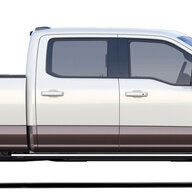
2021 F150 CCSB Space White STX
Well fellas, or gals (some of you sure do act like it), this kept me entertained and gave me a good read along with some knowledge. 7 pages I came back to after a few comments, and I don't think anyone answered my question. I didn't see any improvements over 87 after 3 full tanks, and I've actually done this before when I got the truck with similar results. Did anyone else not really see a difference? It might be that I have to try another brand of gas. 93 is $.80 more and it looks like it's a waste for my specific truck which doesn't make sense. I will say, I raced my friends '16 Cummins dually deleted with a light tune and got him while on 93 so maybe it did something. I'll update whenever I have further findings. I'm thinking it's the gas, or I have to run more tanks to have a fairer comparison.
 

Samson16

Well-known member
First Name
Kyle
Joined
Mar 24, 2023
Threads
18
Messages
3,622
Reaction score
3,587
Location
Orlando, FL.
Vehicles
'22 F-150 XLT Powerboost Super Crew 4x4
Occupation
Aviation systems
. I didn't see any improvements over 87 after 3 full tanks, and I've actually done this before when I got the truck with similar results. Did anyone else not really see a difference?
What improvements were you hoping for again? I've been busy going down a rabbit hole with my girlfriends. ;)
Sponsored


Top